
.png)
NL


A rooftop parking lot combines two worlds that do not naturally go together: roads and buildings, two completely different areas of civil engineering. Reconciling the two requires a complex system in which waterproofing, load-bearing capacity, and traffic load constantly interact. From bituminous waterproofing with clinkers to liquid PMMA systems: each type of waterproofing has its advantages and disadvantages. The trick is to choose what suits the specific situation, budget, and maintenance requirements.
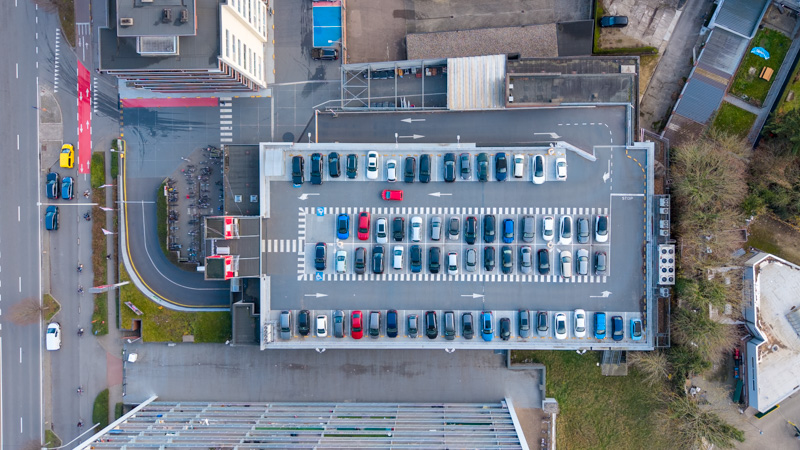
"Making and keeping a parking roof watertight is a major challenge." This statement by Roger Vandeweyer, parking roof specialist at Tectum Group, perfectly sums up the complexity of roof parking lots. Using a roof to create extra parking spaces is sometimes a must in order to organize the construction program within the available space. But it must be a well-considered choice, with due attention to all critical points. "Roof parking lots are more challenging than ordinary flat roofs because of the traffic that drives on them." Roger has overseen dozens of parking roof renovations in his career. "Cars maneuver on the pavement. Sometimes vehicles heavier than the permitted weight drive on it. This places additional demands on the waterproofing and the entire roof structure."
There are several factors that influence the choice of roof structure and driving surface. "It starts with the use of the parking lot, the frequency of use, the client's budget, the load-bearing capacity of the roof, any height restrictions, aesthetic expectations, the configuration—are there many corners or just large straight surfaces—and the maintenance that the owner is willing to do. The final choice of system is therefore a careful weighing up of the pros and cons. In other words, there is no such thing as the perfect parking roof. Moreover, all systems are only suitable for loads of up to 3 tons. Heavier loads require solutions from the road construction industry and an adapted support structure for the building," concludes Roger.
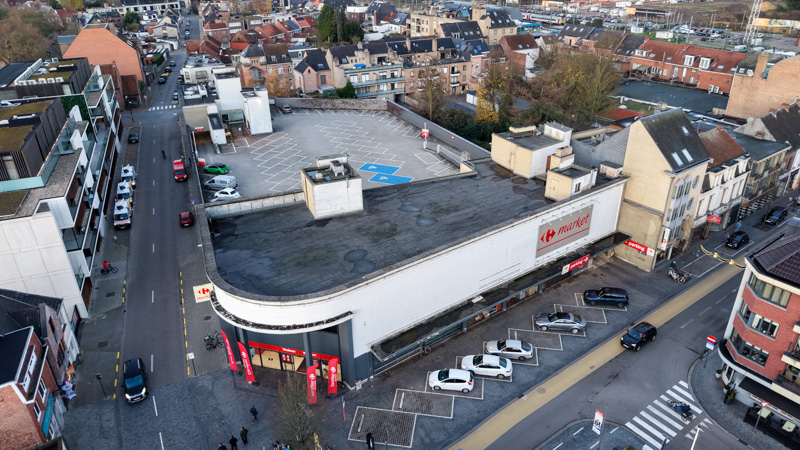
Today, there are various systems for combining a roof parking lot with effective waterproofing. The easiest and, in Roger's opinion, most reliable system is a two-layer bituminous waterproofing with a clinker paving. "With this structure, we apply a primer to the concrete slab, followed by two layers of bituminous waterproofing. In the past, this was only APP or SBS, but nowadays there are also special bituminous roofing membranes for use on roof parking lots. On top of this, we apply a thick drainage layer and the necessary separation and filter layers, followed by gravel with a minimum thickness of 3 cm to place the clinkers on." Roger cannot think of a single roof parking lot with pavers where there have been problems with waterproofing. An additional advantage is that the pavers and joints absorb water, which means that water is less likely to stagnate on the roof. Tectum Group already Tectum Group this technique to the Esplanade office building in Sint-Pieters-Woluwe and the Carrefour in Mol.

A derivative variant is a finish with tiles on tile supports. "In that case, XPS insulation is used in an inverted roof application or cellular glass in a warm roof construction, topped with waterproofing, on which the tile system is then mounted," explains Roger Vandeweyer. This solution is also reliable in terms of waterproofing. One point of attention is the areas where there is frequent movement. The tensioned tiles can come loose there. "This is something to keep in mind during roof maintenance. The tiles must then be retensioned to prevent damage and noise nuisance. Here too, water stagnation is ruled out because rainwater flows away through the joints." See reference Wilrijk Shopping Center.
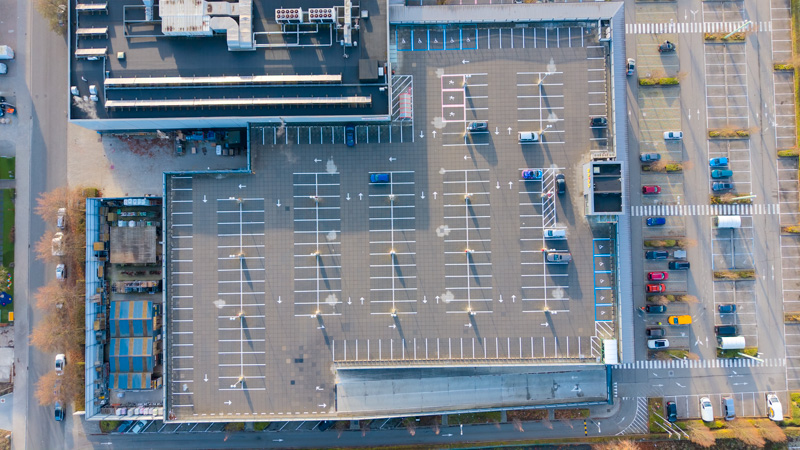
In addition to prefabricated pavements, there are also other driving layers, namely PMMA and mastic asphalt. Mastic asphalt is a straightforward solution. "The mastic asphalt is applied directly onto two layers of bituminous waterproofing. It must be installed carefully and at the right moment. After all, the humidity must not be too high. In addition, the waterproofing must be installed flawlessly. An air bubble between the roofing membranes can have a negative impact on the aesthetics of the finished parking lot," says Roger Vandeweyer. He therefore warns against combining cellular glass and mastic asphalt. This combination quickly leads to problems and is therefore a path you would rather not take.
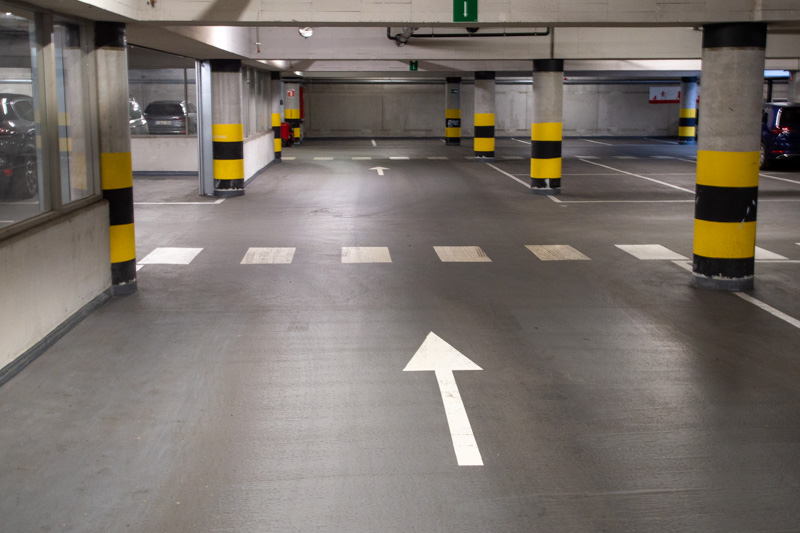
The most recent liquid waterproofing material is PMMA. It has a completely different roof structure and is more complex to install, but offers some undeniable advantages. "The roof structure starts with a bituminous waterproofing as a working seal. On top of that comes a reinforced concrete layer and the necessary separation layers, tailored to the load. When it has dried and hardened sufficiently, we apply a primer and then the PMMA waterproofing. The PMMA is applied in two layers in quick succession. After applying the first layer, we place a fleece cloth in the PMMA to prevent cracking. The fleece absorbs cracks up to 0.3 mm. We then install a cast floor and a top layer over the waterproofing layer," explains Roger Vandeweyer. This is certainly one of the better roof structures, depending on the circumstances, as it also has its disadvantages.
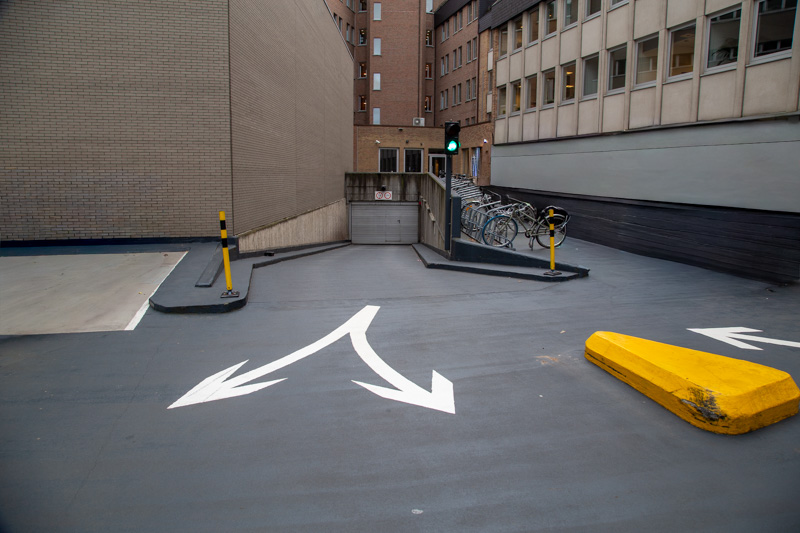
However, Roger prefers to use PMMA in the upstand on cast asphalt roofs or concrete drive roofs without PMMA finishing, "because the seams can then be made seamless, which means that the stresses acting on them are less likely to cause the seams to open up, resulting in water infiltration. The waterproofing must be closely monitored so that any small cracks can be repaired quickly." The downside is that PMMA is an expensive and labor-intensive system that also requires good installation conditions. PMMA does not absorb water, which means that water stagnation on the roof can be a nuisance.

Unfortunately, there is no such thing as the perfect parking roof. Every system has its advantages and disadvantages, but maintenance is always essential.
This call for vigilance emphasizes the importance of proper maintenance. "Early detection of damage is important," says Roger. "If cracks form in PMMA, immediate action must be taken to prevent the fabric from tearing completely. Periodic maintenance is therefore more than just cleaning the drains. Expansion joints and connections must also be checked. The condition of upstands and details such as posts and corners must also be checked." Further maintenance advice depends on the type of finish and the frequency of use. The technical regulations generally assume twice a year.
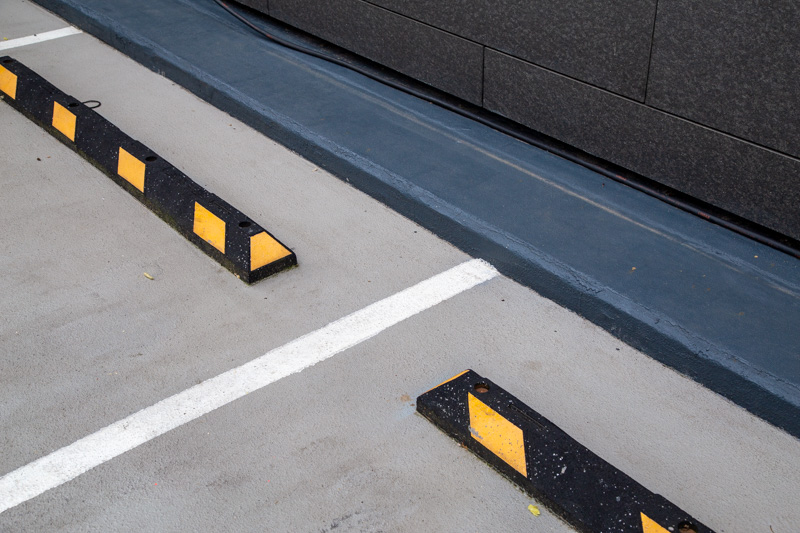
Roger Vandeweyer sees an evolution in the application of PMMA. "The new variants allow the finishing layers to be applied in a single operation, without the need for additional sprinkling. The product is also easier to process." Another upcoming development is the combination of cellular glass and road asphalt. "Road asphalt is less susceptible to deformation. However, the roof structure must be designed to withstand this load."
Roger also sees a broader movement towards circularity. However, he does see an issue with this. "With circularity in mind, people are looking at whether fully adhered waterproofing can be omitted. Good waterproofing is paramount. A circular parking roof that is not sustainable also misses the mark."
Do you have any questions after reading this article? Contact us and we will be happy to help you!
A rooftop parking lot combines two worlds that do not naturally go together: roads and buildings, two completely different areas of civil engineering. Reconciling the two requires a complex system in which waterproofing, load-bearing capacity, and traffic load constantly interact. From bituminous waterproofing with clinkers to liquid PMMA systems: each type of waterproofing has its advantages and disadvantages. The trick is to choose what suits the specific situation, budget, and maintenance requirements.
"Making and keeping a parking roof watertight is a major challenge." This statement by Roger Vandeweyer, parking roof specialist at Tectum Group, perfectly sums up the complexity of roof parking lots. Using a roof to create extra parking spaces is sometimes a must in order to organize the construction program within the available space. But it must be a well-considered choice, with due attention to all critical points. "Roof parking lots are more challenging than ordinary flat roofs because of the traffic that drives on them." Roger has overseen dozens of parking roof renovations in his career. "Cars maneuver on the pavement. Sometimes vehicles heavier than the permitted weight drive on it. This places additional demands on the waterproofing and the entire roof structure."
There are several factors that influence the choice of roof structure and driving surface. "It starts with the use of the parking lot, the frequency of use, the client's budget, the load-bearing capacity of the roof, any height restrictions, aesthetic expectations, the configuration—are there many corners or just large straight surfaces—and the maintenance that the owner is willing to do. The final choice of system is therefore a careful weighing up of the pros and cons. In other words, there is no such thing as the perfect parking roof. Moreover, all systems are only suitable for loads of up to 3 tons. Heavier loads require solutions from the road construction industry and an adapted support structure for the building," concludes Roger.
Today, there are various systems for combining a roof parking lot with effective waterproofing. The easiest and, in Roger's opinion, most reliable system is a two-layer bituminous waterproofing with a clinker paving. "With this structure, we apply a primer to the concrete slab, followed by two layers of bituminous waterproofing. In the past, this was only APP or SBS, but nowadays there are also special bituminous roofing membranes for use on roof parking lots. On top of this, we apply a thick drainage layer and the necessary separation and filter layers, followed by gravel with a minimum thickness of 3 cm to place the clinkers on." Roger cannot think of a single roof parking lot with pavers where there have been problems with waterproofing. An additional advantage is that the pavers and joints absorb water, which means that water is less likely to stagnate on the roof. Tectum Group already Tectum Group this technique to the Esplanade office building in Sint-Pieters-Woluwe and the Carrefour in Mol.
A derivative variant is a finish with tiles on tile supports. "In that case, XPS insulation is used in an inverted roof application or cellular glass in a warm roof construction, topped with waterproofing, on which the tile system is then mounted," explains Roger Vandeweyer. This solution is also reliable in terms of waterproofing. One point of attention is the areas where there is frequent movement. The tensioned tiles can come loose there. "This is something to keep in mind during roof maintenance. The tiles must then be retensioned to prevent damage and noise nuisance. Here too, water stagnation is ruled out because rainwater flows away through the joints." See reference Wilrijk Shopping Center.
In addition to prefabricated pavements, there are also other driving layers, namely PMMA and mastic asphalt. Mastic asphalt is a straightforward solution. "The mastic asphalt is applied directly onto two layers of bituminous waterproofing. It must be installed carefully and at the right moment. After all, the humidity must not be too high. In addition, the waterproofing must be installed flawlessly. An air bubble between the roofing membranes can have a negative impact on the aesthetics of the finished parking lot," says Roger Vandeweyer. He therefore warns against combining cellular glass and mastic asphalt. This combination quickly leads to problems and is therefore a path you would rather not take.
The most recent liquid waterproofing material is PMMA. It has a completely different roof structure and is more complex to install, but offers some undeniable advantages. "The roof structure starts with a bituminous waterproofing as a working seal. On top of that comes a reinforced concrete layer and the necessary separation layers, tailored to the load. When it has dried and hardened sufficiently, we apply a primer and then the PMMA waterproofing. The PMMA is applied in two layers in quick succession. After applying the first layer, we place a fleece cloth in the PMMA to prevent cracking. The fleece absorbs cracks up to 0.3 mm. We then install a cast floor and a top layer over the waterproofing layer," explains Roger Vandeweyer. This is certainly one of the better roof structures, depending on the circumstances, as it also has its disadvantages.
However, Roger prefers to use PMMA in the upstand on cast asphalt roofs or concrete drive roofs without PMMA finishing, "because the seams can then be made seamless, which means that the stresses acting on them are less likely to cause the seams to open up, resulting in water infiltration. The waterproofing must be closely monitored so that any small cracks can be repaired quickly." The downside is that PMMA is an expensive and labor-intensive system that also requires good installation conditions. PMMA does not absorb water, which means that water stagnation on the roof can be a nuisance.
This call for vigilance emphasizes the importance of proper maintenance. "Early detection of damage is important," says Roger. "If cracks form in PMMA, immediate action must be taken to prevent the fabric from tearing completely. Periodic maintenance is therefore more than just cleaning the drains. Expansion joints and connections must also be checked. The condition of upstands and details such as posts and corners must also be checked." Further maintenance advice depends on the type of finish and the frequency of use. The technical regulations generally assume twice a year.
Roger Vandeweyer sees an evolution in the application of PMMA. "The new variants allow the finishing layers to be applied in a single operation, without the need for additional sprinkling. The product is also easier to process." Another upcoming development is the combination of cellular glass and road asphalt. "Road asphalt is less susceptible to deformation. However, the roof structure must be designed to withstand this load."
Roger also sees a broader movement towards circularity. However, he does see an issue with this. "With circularity in mind, people are looking at whether fully adhered waterproofing can be omitted. Good waterproofing is paramount. A circular parking roof that is not sustainable also misses the mark."
Do you have any questions after reading this article? Contact us and we will be happy to help you!
The biggest pitfalls with waterproof parking roofs
A rooftop parking lot combines two worlds that do not naturally go together: roads and buildings, two completely different areas of civil engineering. Reconciling the two requires a complex system in which waterproofing, load-bearing capacity, and traffic load constantly interact. From bituminous waterproofing with clinkers to liquid PMMA systems: each type of waterproofing has its advantages and disadvantages. The trick is to choose what suits the specific situation, budget, and maintenance requirements.
"Making and keeping a parking roof watertight is a major challenge." This statement by Roger Vandeweyer, parking roof specialist at Tectum Group, perfectly sums up the complexity of roof parking lots. Using a roof to create extra parking spaces is sometimes a must in order to organize the construction program within the available space. But it must be a well-considered choice, with due attention to all critical points. "Roof parking lots are more challenging than ordinary flat roofs because of the traffic that drives on them." Roger has overseen dozens of parking roof renovations in his career. "Cars maneuver on the pavement. Sometimes vehicles heavier than the permitted weight drive on it. This places additional demands on the waterproofing and the entire roof structure."
There are several factors that influence the choice of roof structure and driving surface. "It starts with the use of the parking lot, the frequency of use, the client's budget, the load-bearing capacity of the roof, any height restrictions, aesthetic expectations, the configuration—are there many corners or just large straight surfaces—and the maintenance that the owner is willing to do. The final choice of system is therefore a careful weighing up of the pros and cons. In other words, there is no such thing as the perfect parking roof. Moreover, all systems are only suitable for loads of up to 3 tons. Heavier loads require solutions from the road construction industry and an adapted support structure for the building," concludes Roger.
Today, there are various systems for combining a roof parking lot with effective waterproofing. The easiest and, in Roger's opinion, most reliable system is a two-layer bituminous waterproofing with a clinker paving. "With this structure, we apply a primer to the concrete slab, followed by two layers of bituminous waterproofing. In the past, this was only APP or SBS, but nowadays there are also special bituminous roofing membranes for use on roof parking lots. On top of this, we apply a thick drainage layer and the necessary separation and filter layers, followed by gravel with a minimum thickness of 3 cm to place the clinkers on." Roger cannot think of a single roof parking lot with pavers where there have been problems with waterproofing. An additional advantage is that the pavers and joints absorb water, which means that water is less likely to stagnate on the roof. Tectum Group already Tectum Group this technique to the Esplanade office building in Sint-Pieters-Woluwe and the Carrefour in Mol.
A derivative variant is a finish with tiles on tile supports. "In that case, XPS insulation is used in an inverted roof application or cellular glass in a warm roof construction, topped with waterproofing, on which the tile system is then mounted," explains Roger Vandeweyer. This solution is also reliable in terms of waterproofing. One point of attention is the areas where there is frequent movement. The tensioned tiles can come loose there. "This is something to keep in mind during roof maintenance. The tiles must then be retensioned to prevent damage and noise nuisance. Here too, water stagnation is ruled out because rainwater flows away through the joints." See reference Wilrijk Shopping Center.
Unfortunately, there is no such thing as the perfect parking roof. Every system has its advantages and disadvantages, but maintenance is always essential.

Making and keeping a parking roof watertight is a major challenge. Discover how we tackle it.
Read more
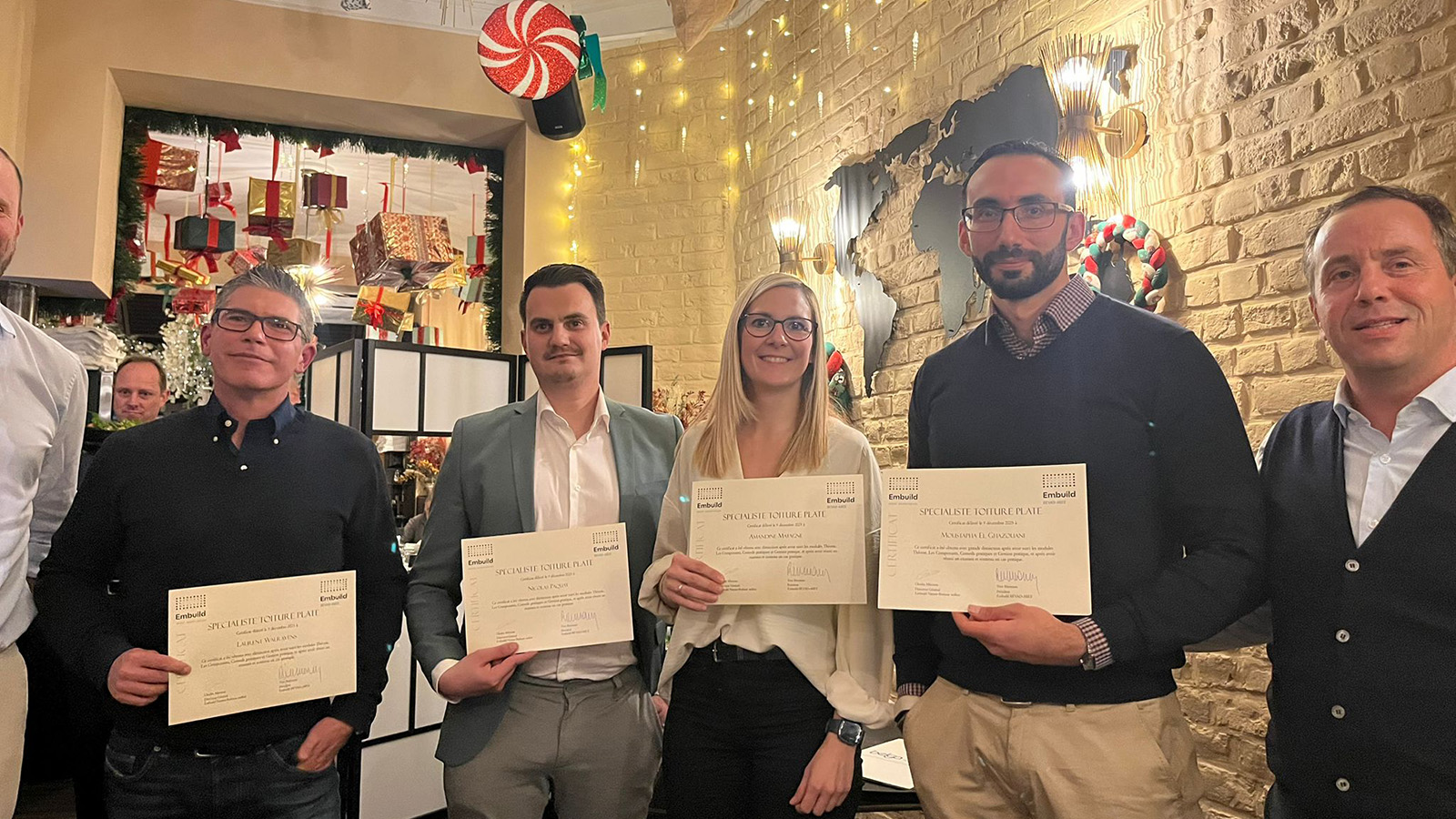
Congratulations on obtaining your Flat Roof Specialist certificate!
Read more

Read more

Read more

Read more

Excessive or necessary?
Read more

Nearly 40% of global CO2 emissions are emitted by the construction industry. Time to change course. With a debate on circularity and circular flat roofs, Tectum Group is doing its part. Review the full debate.
Read more

SERV report confirms what we already knew
Read more




.webp)


.webp)
